
Jupiter ($JUP) is designed to streamline cryptocurrency trading by optimizing liquidity from various DEX platforms. With its innovative features, Jupiter enables users to swap tokens at the best rates while minimizing slippage and transaction costs. As the DeFi landscape evolves, Jupiter stands out as a key player for both traders and developers alike.
In this post, we’ll provide an overview of Jupiter and its token’s potential, along with ways to efficiently purchase $JUP while maximizing your capital on iFlux.
What is Jupiter?
Jupiter is a leading DEX aggregator built on the Solana blockchain, aimed at simplifying the cryptocurrency trading experience. By aggregating liquidity from over 20 decentralized exchanges (DEXs) and Automated Market Makers (AMMs) like Raydium and Orca, Jupiter ensures that users can execute token swaps at the best rates available.
In short, Jupiter functions like a “supermarket” for cryptocurrency transactions on Solana, where users can compare prices from various “stores” to secure the best deals.
Its design prioritizes minimizing transaction costs and slippage, allowing for efficient trading. Key features such as limit orders, dollar-cost averaging (DCA), and cross-chain bridges enhance the user experience, making it easier for traders to manage their investments.

In addition to catering to individual users, Jupiter provides robust tools for developers, enabling them to integrate the platform’s technology into their own applications. By leveraging Solana’s high-speed, low-cost infrastructure, Jupiter not only enhances trading efficiency but also positions itself as a pivotal player in the DeFi landscape.
Besides token swaps, Jupiter offers perpetual futures, limit orders, and lending products like Jupiter Lend, allowing borrowing up to 90% of the asset’s value for a complete DeFi toolkit. That sums up the essentials of “What is Jupiter?”.
How it works
Jupiter connects with multiple DEXs and AMMs on Solana, including Serum, Raydium, and Orca. When users perform a swap on Jupiter, the platform automatically searches for the optimal trading route across all connected liquidity sources, ensuring users get the best prices with minimal slippage.
The core components of Jupiter’s functionality include:
- Aggregator Engine: The heart of Jupiter, responsible for finding and comparing prices from various liquidity sources.
- Smart Contracts: These manage transaction execution, ensuring transparency and security.
- API (Application Programming Interface): Allows integration with other applications and services.
- JUP Token: The governance token of the platform.
The rise of Jupiter in the Solana ecosystem
Jupiter was launched in October 2021 by the anonymous developer known as “Meow”, quickly establishing itself as the default swap provider for the Solana ecosystem. Initially focused on building the best swap infrastructure, Jupiter aimed to become the go-to aggregator for Solana users.
Over time, Jupiter evolved from a simple DEX aggregator into a comprehensive DeFi ecosystem. Today, Jupiter offers a futures trading platform with leverage up to 100x and a liquidity pool that rewards providers with a share of transaction fees.
- Jupiter commands around 95% of the market share for DEX aggregators on Solana, handling a substantial portion of all transactions within the Solana DEX ecosystem.
- As of October 2025, Jupiter has amassed over $3 billion in Total Value Locked (TVL), consistently placing it among the top three DeFi protocols on Solana in terms of both TVL and revenue generation.
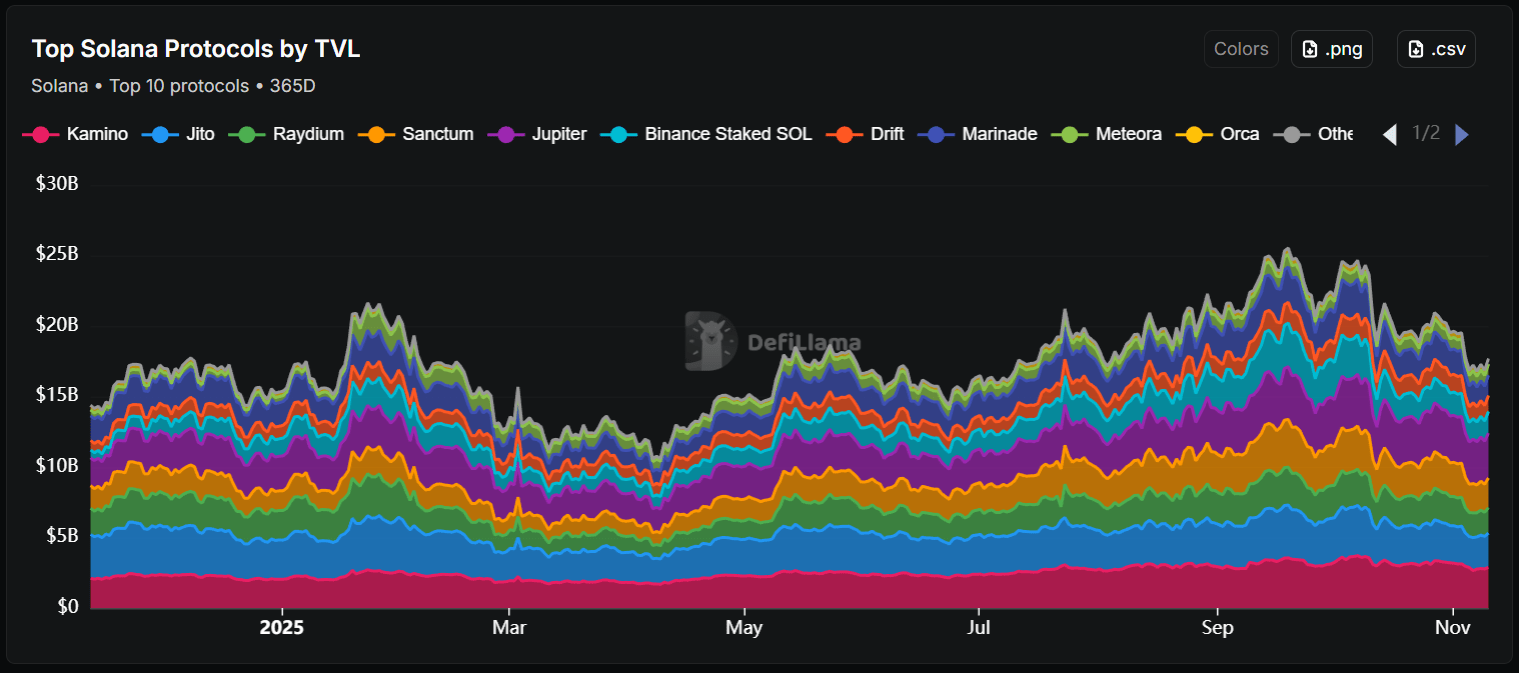
- Jupiter has established itself as the second-largest network validator on Solana, bolstered by its own liquid staking token, JupSOL.
Jupiter’s key features
Jupiter’s feature set combines speed, security, and versatility—making it essential for both retail traders and power users. Here’s a brief overview of the current key features and products that define Jupiter.
Core Swap Engine
Jupiter scans more than 35 Solana DEXs in real time to deliver the best possible price in a single transaction. This smart routing minimizes slippage and gas costs, handling everything from stablecoin swaps to high-volatility memecoin trades with $1 trillion+ in cumulative volume.
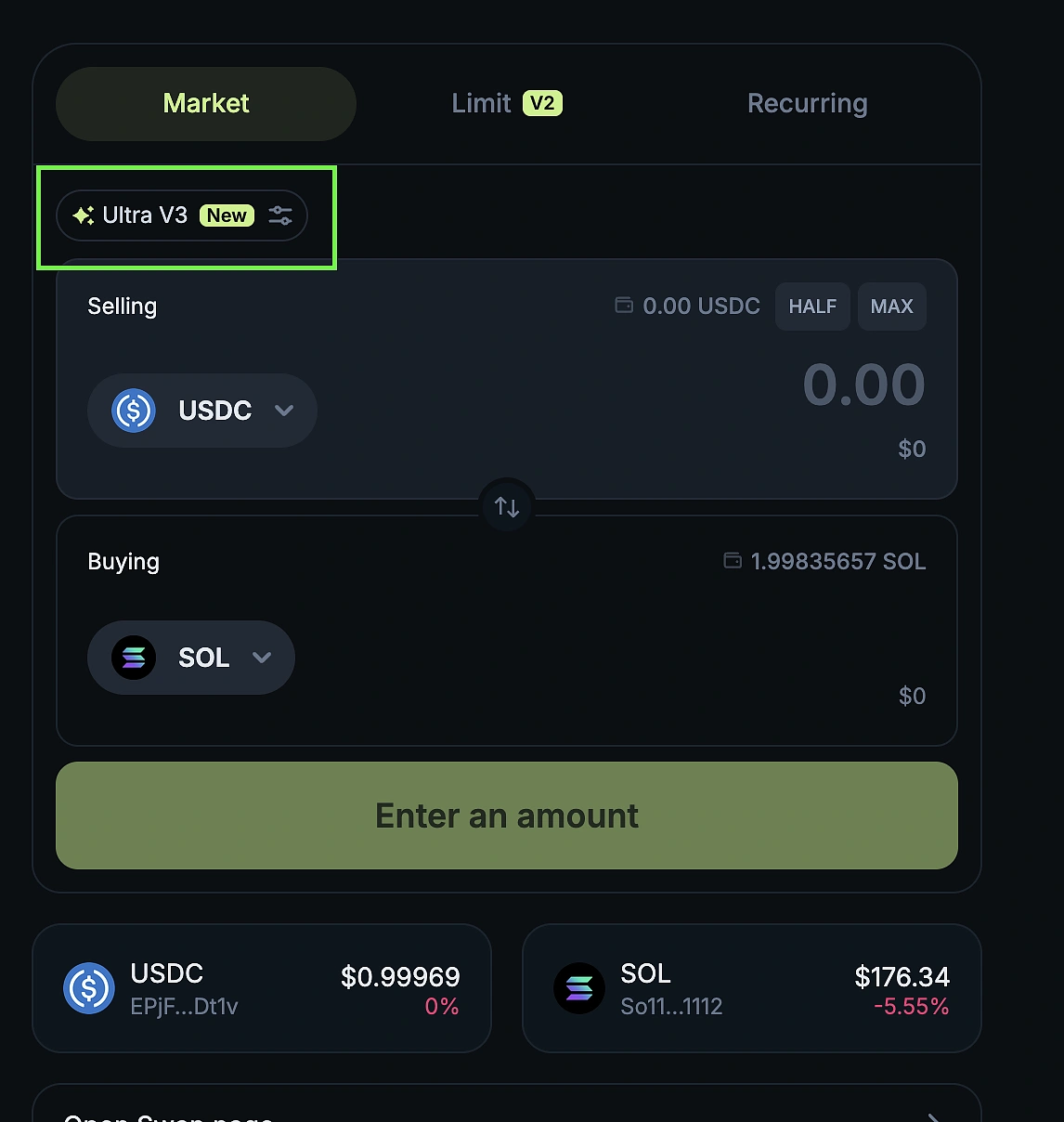
Jupiter Ultra V3
The premium tier enhances execution with MEV protection and an average +0.006% slippage improvement over standard routes. At just 0.1% fee, it’s a go-to for large trades, while free “Manual” mode keeps basic swaps accessible.
Perpetuals Trading
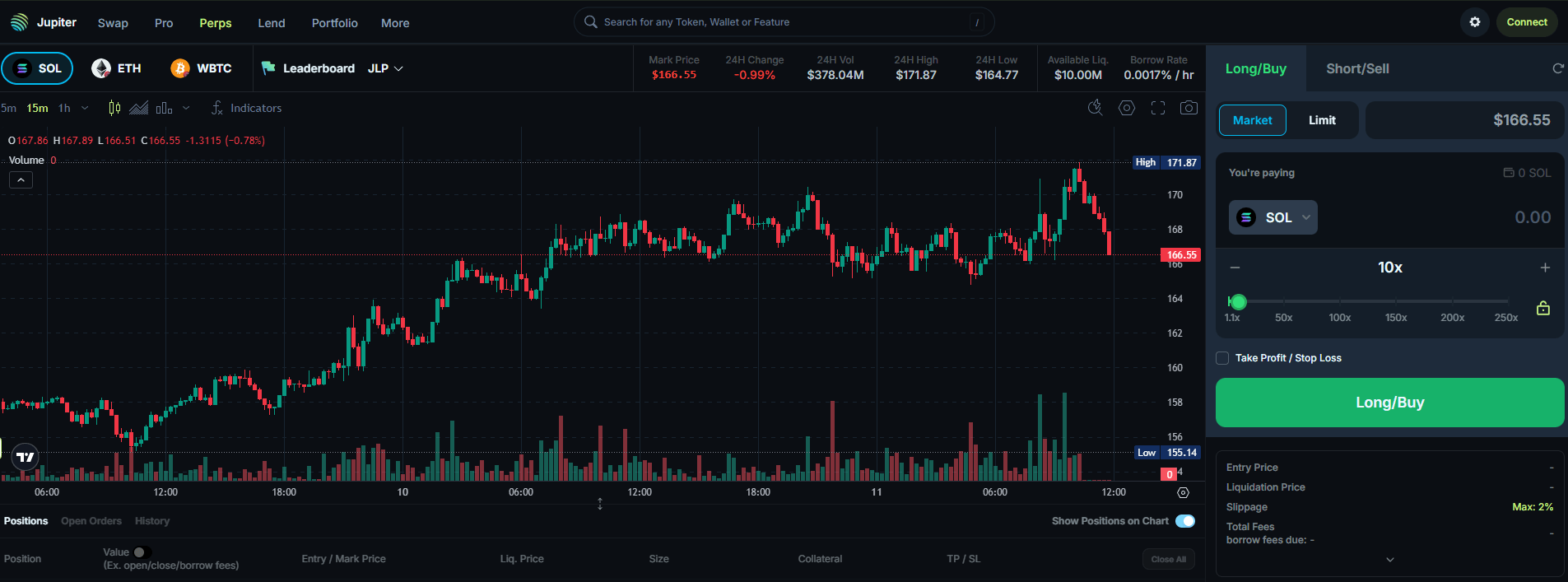
Launched in 2023, this platform offers up to 250x leverage on BTC, ETH, SOL, and more. Using a JLP liquidity pool model, it generated $46 million in Q3 2025 revenue—allowing traders to speculate while LPs earn fees passively.
Jupiter Lend
Rolled out in beta (August 2025) with Fluid, it supports 90% LTV loans at 0.1% fees. TVL surged past $1 billion in days, with $150 million+ USDC borrowed, offering flexible leverage without liquidation risks.

JupSOL & Staking
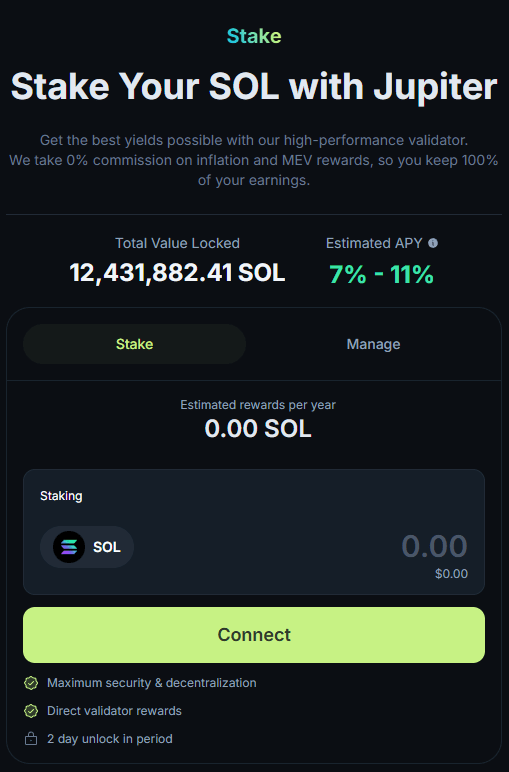
Jupiter’s liquid staking token, JupSOL, has made it Solana’s second-largest validator (11.39M SOL staked). Users earn native rewards without lockups, while JUP holders govern via DAO and receive active staking yields—including annual “Jupuary” airdrops.
Future-Ready Tools
2025 brings prediction markets (Kalshi-integrated beta) and JupUSD stablecoin (Q4, backed by Ethena & BlackRock’s BUIDL). A desktop/mobile wallet with gasless swaps is also in development.
$JUP Token
$JUP is the utility token for Jupiter, a DEX aggregator on the Solana blockchain. It allows users to swap tokens at optimal rates across various liquidity pools, enhancing the trading experience.
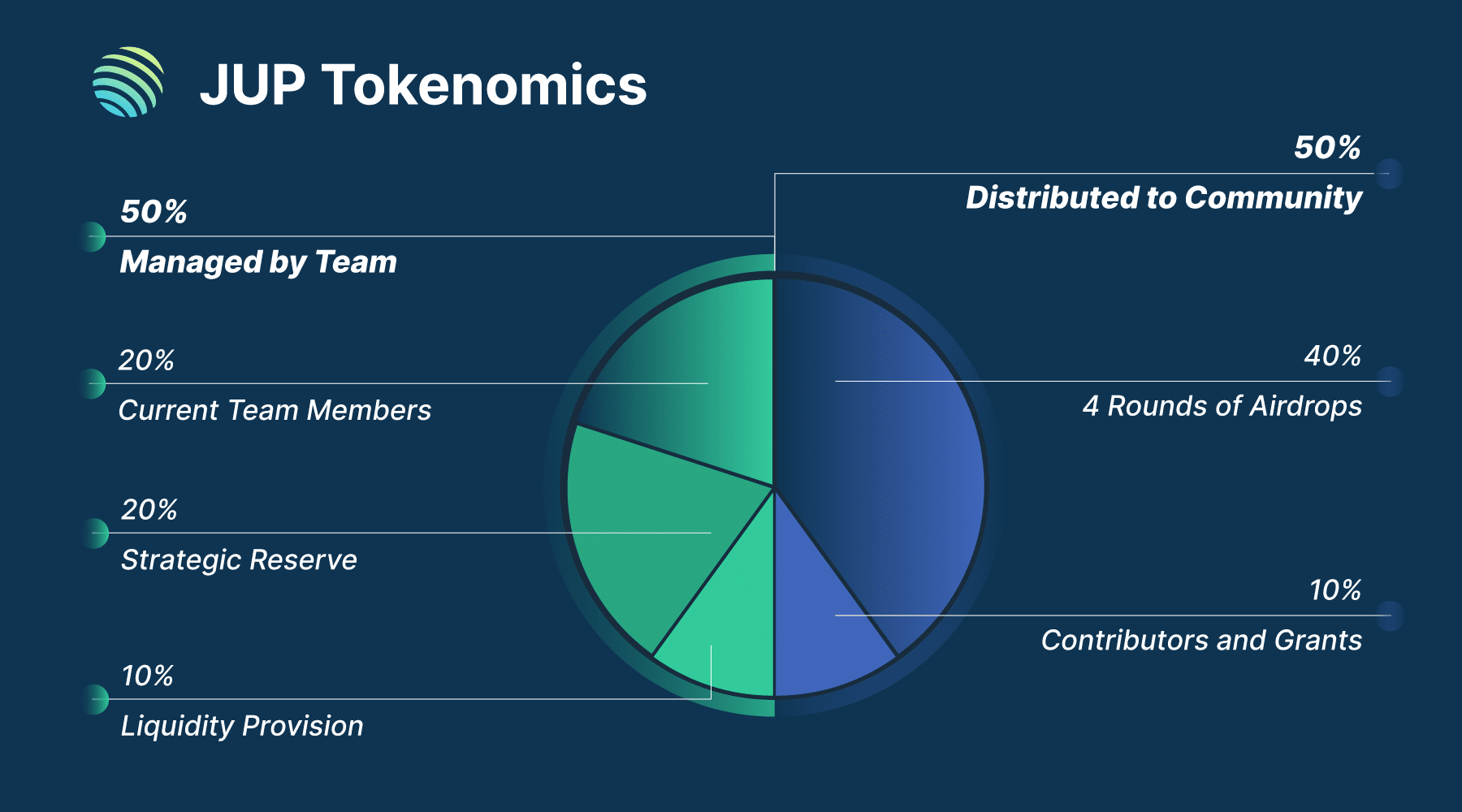
With a total supply of 10 billion tokens, $JUP is distributed as follows:
- Airdrop: 40%
- Team: 20%
- Strategic Reserve: 20%
- Liquidity Provision: 10%
- Contributors and Grants: 10%
Owning $JUP tokens allows participation in the Jupiter ecosystem, offering potential rewards and governance rights as the platform expands.
Strategic partnerships
Jupiter’s success is driven by key partnerships that enhance both retail and institutional trading:
- Raydium: Responsible for approximately 80% of Jupiter’s swaps. Raydium’s dynamic AMM pools ensure fast execution, even during high-volatility events like memecoin launches.
- Orca: By providing concentrated liquidity, Orca optimizes trades involving stablecoins and blue-chip assets, while reducing gas fees by up to 50%.
- Meteora: This partner supports quick deployments for volatile assets, featuring events similar to Pump.fun.
- Phoenix and OpenBook: These platforms enhance Jupiter’s offerings with order book depth and limit orders, contributing $46 million in revenue in Q3 2025 alone.
- On the user experience front, Phantom Wallet embeds Jupiter swaps directly into 70%+ of Solana wallets, while Birdeye powers real-time analytics for DCA, TWAP, and limit order precision.
- Rounding out the ecosystem are Saber, Penguin Finance, and Fluid—the latter enabling Jupiter Lend’s $1B+ TVL with 90% LTV loans. Together, these alliances support 8.4M+ active wallets and position Jupiter not just as a swap tool, but as Solana’s DeFi superapp.
Similar projects to Jupiter
Although Jupiter dominates Solana with 95% aggregator market share, multi-chain competitors offer similar liquidity routing, low fees, and advanced order types for broader DeFi access.
- 1inch aggregates 200+ DEXs across Ethereum, L2s, Solana, and BSC, delivering optimal swaps with gas refunds and limit orders—ideal for cross-chain traders. iFlux also supports 1INCH token. So if you want an alternative, stay tuned for our analysis on 1inch, which offers extensive DeFi access and innovative features.
- UniswapX introduces intent-based execution on Ethereum and L2s, enabling gasless trades and MEV protection with $1.5T volume.
- ParaSwap optimizes L2 liquidity from 20+ sources, focusing on low-slippage and gas efficiency, making it a strong Ethereum-focused alternative.
These platforms expand trading options beyond Solana, catering to users seeking flexibility and efficiency in multi-chain environments.
Potential and challenges of holding $JUP token
Benefits
- Price growth potential: Analysts project $JUP prices could reach $0.35 to $1.23 in 2025, with long-term estimates for 2030 between $2 and $8.55, driven by DeFi growth and token burns.
- Staking rewards: Earn 15-21% APY through JupSOL liquid staking, along with annual airdrops and governance voting that enhance utility.
- Ecosystem expansion: As Jupiter nears $3 billion in TVL and dominates Solana’s DEX market, $JUP benefits from increased revenue, particularly from lending and perpetuals.
- Governance participation: DAO membership allows holders to influence features and potentially share in protocol fees.

Challenges and risks
- Price volatility: Short-term forecasts suggest drops to $0.27 by December 2025 amid bearish sentiment, with the Fear & Greed Index indicating extreme fear.
- Dependency on Solana: $JUP’s performance is tied to Solana’s network stability, with regulatory risks posing potential threats.
- Upcoming token unlocks: The release of 53 million $JUP tokens may pressure prices, and limited utility could lead to speculation.
- Regulatory risks: Stricter regulations could trigger price dips, with anticipated lows between $0.63 and $0.74.
$JUP is appealing for long-term Solana investors, with potential returns over 100% by 2030. Diversify and monitor token unlocks, and stake for yields while managing risk. Or if you want a more efficient way to buy and own $JUP, keep reading as we explore the best strategies and tools available for maximizing your investment.
How to buy $JUP with just 15% upfront on iFlux Global
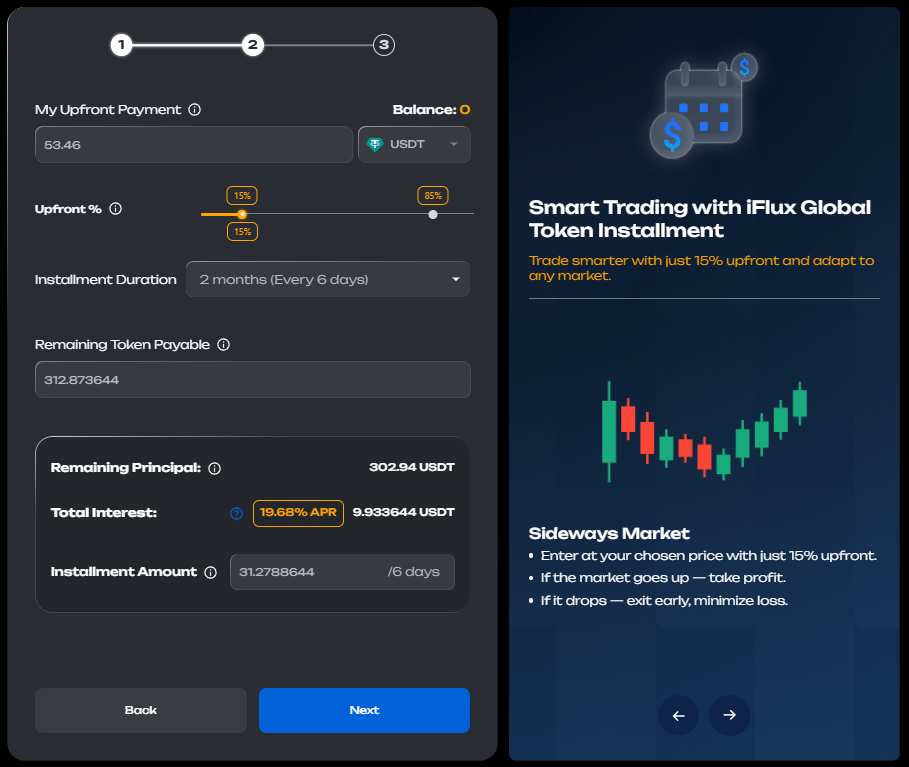
On iFlux Global, the innovative Token Installment feature allows you to acquire $JUP with only a 15% down payment. This approach is ideal for low-cap investors seeking high-potential tokens. The remaining 85% is payable in flexible terms ranging from 10 days to 12 months, providing you with manageable payment options.
Quick example: Buying $JUP worth $1,000 USDT.
Suppose you wish to purchase $JUP equivalent to $1,000 USDT on a 6-month plan with a 15% upfront payment in USDT. Here’s how the calculations work:
- Upfront payment: $1,000 × 15% = $150 USDT
- Borrowed amount: $1,000 × 85% = $850 USDT.
- Total interest: $850 × 29.45% × 0.5 = $125.21 USDT.
- Total repayment amount: $850 + $125.21 = $975.21 USDT.
- Payment per term (10 equal payments): $975.21 ÷ 10 = $97.52 USDT.
Key advantages
- Fixed interest rate: Your interest rate is locked in at the time of purchase, protecting you from market fluctuations.
- Zero liquidation risk: Your position remains secure during extreme price swings—no forced liquidations.
- Flexible exit options: You can transfer or close contracts at any time, allowing for strategic adjustments.
- If prices surge or dip, you can quickly exit and seize other opportunities, with just a small penalty fee from 0.2%.
Smart moves with iFlux
- Buy $JUP with just 15% upfront for optimal capital efficiency.
- Diversify with established tokens like $BTC, $ETH, and $BNB, or explore riskier options with growth potential such as $MOVE or $ETHENA.
- Use Daily Earn (12% APR) for idle capital.
- Utilize Contract Transfer to sell profitable contracts to other users.
- Swap unlocked $JUP tokens for stablecoins during price surges.
- Hold long-term if fundamentals continue strengthening.
Why is this 29.45% APR a smart investment?
Currently, $JUP offers a competitive 29.45% APR. While not excessively high, this rate indicates solid growth potential for a token still gaining traction.
- Volatility stability: Jupiter’s DeFi integrations encourage steady user engagement, despite its recent launch in 2024. This results in a higher APR compared to established cryptocurrencies like BTC (4.67% APR).
- Growth potential: Jupiter’s ecosystem is rapidly expanding yet not fully mainstream. This growth phase presents a favorable risk-reward scenario.
- Accessibility: The 29.45% APR makes $JUP an accessible option for installment buyers. If $JUP appreciates along with Solana’s DeFi expansion, the gains could significantly outweigh the interest costs, ideal for long-term holders.
At 29.45%, the $JUP installment option offers a low-barrier entry into Solana’s DeFi landscape. This moderate APR ensures manageable costs while providing substantial growth potential as adoption increases. iFlux will continue to monitor and adjust the APR based on Jupiter’s growth and popularity, ensuring you get the best value as the ecosystem evolves.
Conclusion
Jupiter is a key player in the Solana DeFi landscape, enhancing cryptocurrency trading with its efficient DEX aggregation and liquidity solutions. As the platform continues to evolve, it presents significant opportunities for users and developers alike. While $JUP is a valuable utility token, Jupiter’s innovative features position it well for future success in the decentralized finance space. Make sure to do your own research to make informed investment decisions.